What Evergreen buried in 1976
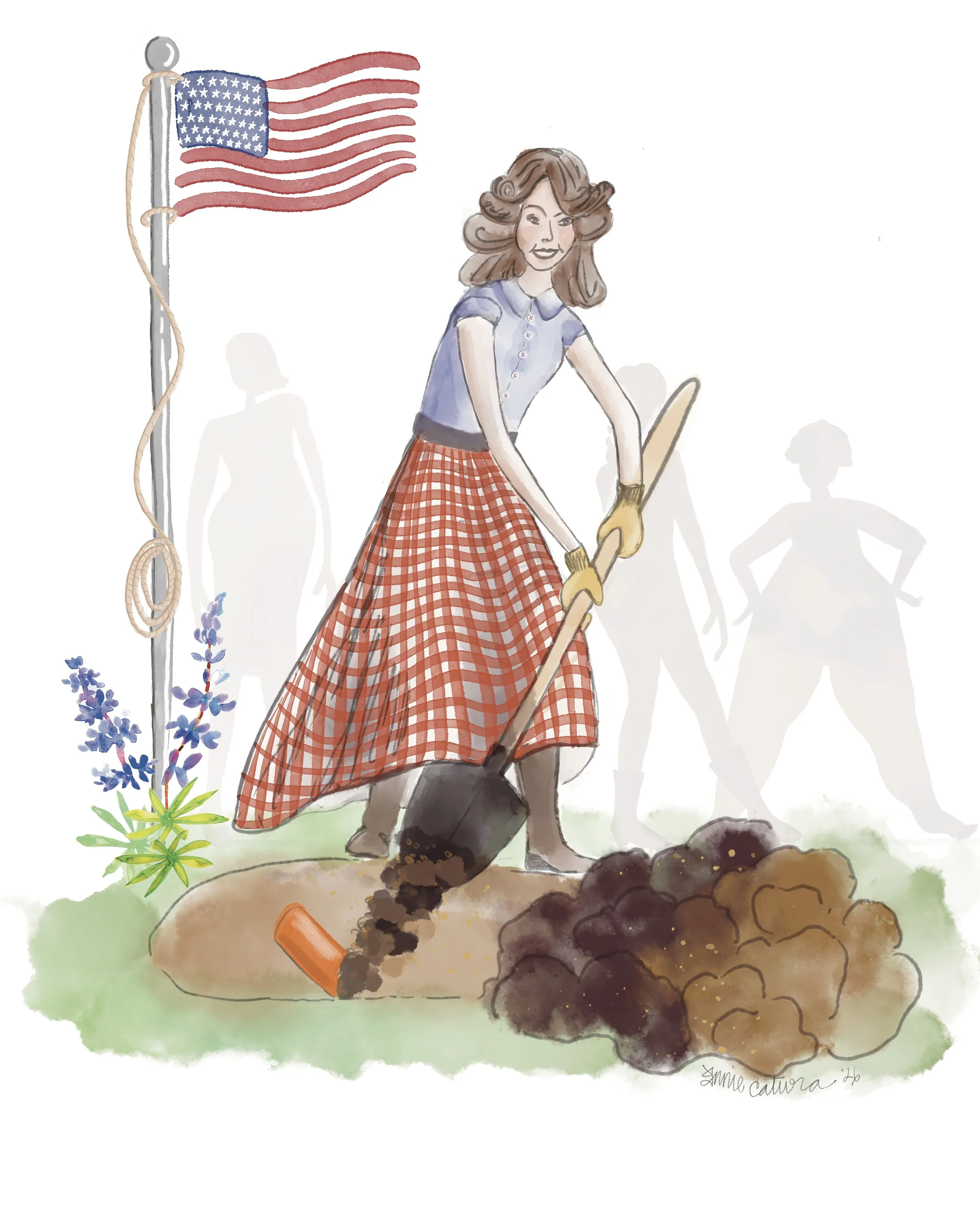
In the summer of 1976, a young woman in a red-and-white gingham prairie dress and denim shirt stood on the patio at Hiwan Homestead Museum holding a shovel.
Around her, Evergreen residents gathered among the sounds of black-powder rifles, gold-panning demonstrations and mountain men with names like Uncle Grizz and Jim Coon. The smell of boiling jelly drifted through the air while a historic 1881 flagpole, hauled up from Denver by the Evergreen Blue Spruce Kiwanis Club, was dedicated nearby.
And somewhere beneath the soil, a smallcopper tube disappeared into the ground.
Inside were pieces of Evergreen in 1976: notes, objects, memories and whatever a group of local children and teenagers believed future generations should know about their world. The group, known as the Centennial Pioneers, ranged in age from 8 to 18. Each contributed something meaningful before the capsule was sealed and buried beneath what would later become a commemorative boulder.
One of those young people was Vickie Corder, who was 26 years old at the time and leading the Junior Historical Society under the Jefferson County Historical Society (now the Evergreen Mountain Area Historical Society). In photographs from the event, Corder appears with feathered "Farrah Fawcett" style hair, smiling as she helps bury the capsule beneath the summer sun.
Nearly 50 years later, she still remembers the atmosphere of the time vividly: the energy of the Bicentennial celebrations, the excitement of the children and the sense that Evergreen was becoming something very special. Like many residents of the era, Corder became deeply involved in community life, joining organizations like the Colorado Mountain Club, Audubon Society and local historical groups while helping shape the civic spirit that still defines Evergreen today.
What survives most clearly in her memories is not necessarily the objects buried underground, but the feeling of participation itself: children gathering to paint signs for parades, neighbors volunteering together and a mountain community imagining what Evergreen might become 50 years into the future.
This summer, exactly 50 years later, Evergreen will gather again to open it. What survived? What seemed important in 1976? And why are Americans so fascinated with burying messages to the future in the first place?
The impulse runs deep. In 1795, Samuel Adams and Paul Revere placed a brass box filled with coins, newspapers and historical artifacts into the cornerstone of the Massachusetts State House, beginning what became a particularly American tradition of speaking to the future. Mark Twain once wrote that “there comes a time in every rightly constructed boy’s life when he has a raging desire to go somewhere and dig for hidden treasure,” and time capsules tap directly into that instinct — part treasure hunt, part historical record and part act of hope.
But time capsules are also strangely fragile things.
Archivists and museum conservators warn that moisture, shifting temperatures, chemical reactions and obsolete technology quietly destroy many capsules long before they are reopened. Today, institutions like the Smithsonian recommend strict preservation guidelines — far removed from the romantic image of burying a box beneath a tree and hoping for the best.
Still, the mystery is part of the magic.
And perhaps what matters most is not whether every object survives intact, but what those objects reveal about the people who buried them. Evergreen in the 1970s was itself in transition: Interstate 70 reshaped travel through the mountains, roads were paved, growth accelerated and conversations about development, preservation and the proposed Winter Olympics stirred strong local opinions.
The community became a cultural patchwork of sawmills, ranching traditions, ski culture and back-to-the-land idealism.
Evergreen carried the textures of the era: faded bell-bottom denim, wrinkle-free polyester, turquoise jewelry, shag carpet, vinyl records, patchouli and cigarette smoke lingering through crowded gathering spaces. It was an eclectic, rapidly changing mountain town filled with experimentation, civic energy and a growing sense of local identity — one that helped shape organizations and community spaces that still define the area today, from the recreation district and arts center to Audubon programs, trail systems and historical preservation efforts rooted in protecting the mountain landscape and community character.
And the story is not over yet.
On July 31, 2026, the 1976 Centennial Pioneers Time Capsule will be opened at Hiwan Heritage Park & Museum, offering Evergreen a rare glimpse into the hopes, memories and everyday lives buried beneath the boulder nearly 50 years ago. The following day, the community will gather once again to bury a new capsule for the future.
The Evergreen Mountain Area Historical Society is currently collecting stories, photographs, memories and ideas for the next capsule, especially from young people.