🖤 When We Met Krampusnacht
The Eleventh Hour by Annie Catura
There are winter nights that linger long after the season ends. Nights stitched with cold air, woodsmoke, and something older than tradition. This was one of those nights.
We were wandering the German Christmas market under the Clocktower in Denver, wrapped in coats, holding steaming mugs we could barely see above. The lights of the booths glowed warm gold against the early dark of December — cinnamon, roasting nuts, and pine mingling together in a way that felt ancient, like memory rather than scent.
Somewhere nearby, bells rattled.
Not the cheerful kind — the deep, metallic kind that echoed like warning.
At first, the sound was distant.
Then the growling started.
It rose from beneath our feet — a low, rumbling snarl drifting up through the sewer grates as people walked over them. Children froze. Adults laughed the nervous laugh people use when they’re not entirely convinced the world is safe, but don’t yet want to admit it.
And then he appeared.
Krampus.
Tall. Horned. Fur trailing the stone walkway behind him as if he had stepped straight out of an old Alpine tale. He didn’t walk like a performer — he stalked like a memory resurfacing.
He moved through the crowd and everything changed a little — the temperature, the pacing of footsteps, the hush that falls when humans instinctively sense ritual.
He paused near us.
Our daughter stared up at him with wide, unblinking eyes caught between terror and fascination. The figure tilted his head in her direction, slow and precise. Not gentle. Not threatening. Just… aware. As if choosing whether she belonged to the world of children or the world of stories.
Somewhere behind us, a small child began to wail -the honest kind, the primal kind, the kind that comes from a place without language. Krampus laughed in response, the deep belly-rattle of someone who enjoys the role they’ve stepped into: monster, mischief-maker, shadow-companion.
Chain links dragged. Bells clanged. The sewer grate snarled again.
And yet — something else lived in that moment besides fear.
There was magic.
There was history.
There was a knowing older than Christmas lights, older than markets or mugs of cocoa, that winter once held both celebration and consequence. Both sweetness and teeth.
Some children ran away screaming. Others followed him, daring him closer. Parents smiled, startled by how quickly instinct and imagination returned. And we — caught between the childhoods behind us and the childhoods we were raising — stood still long enough to feel something old wake up.
Maybe that’s why this memory stayed.
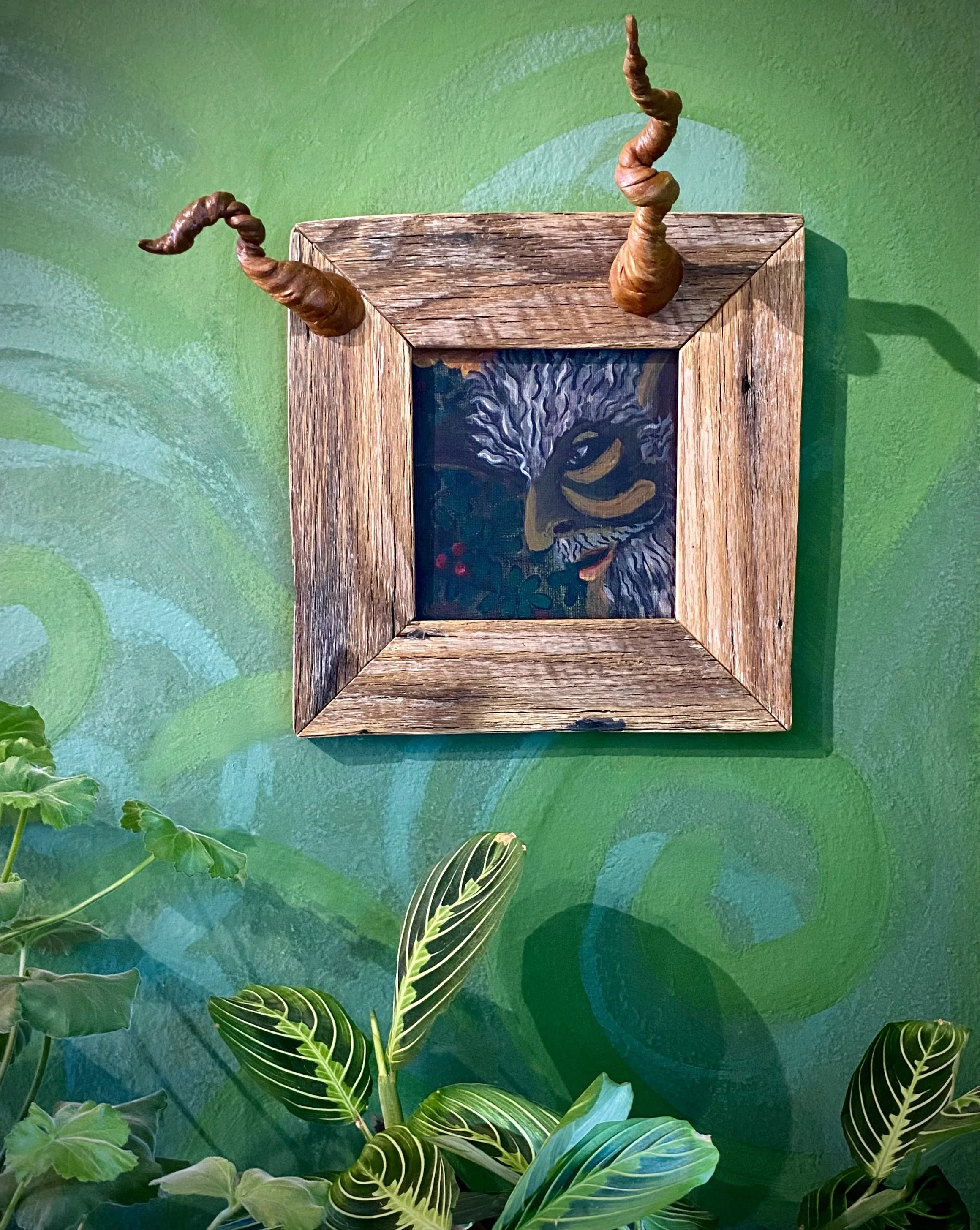
Maybe that’s why, years later, Krampus returned: Not in fur and bells, but in paint, reclaimed barn wood, texture, and sculpted horns forming slowly at my studio table until he felt undeniably alive.
Not a monster.
A reminder.
That winter once belonged to both saints and shadows. And sometimes, the old stories still ask to be retold.
If you’d like to meet this version of Krampus — in gallery light rather than growling cobblestones — he’ll be part of the Krampusnacht 8 Art Exhibition at Memento Mori Gallery in Lakewood, Colorado this December.
Perhaps that’s why he appeared again this year — not in the streets, but through my hands.
A story revisiting its storyteller.
A shadow stepping forward to join the season.