BENEATH PURPLE MOUNTAIN MAJESTY: The Return of the Buffalo
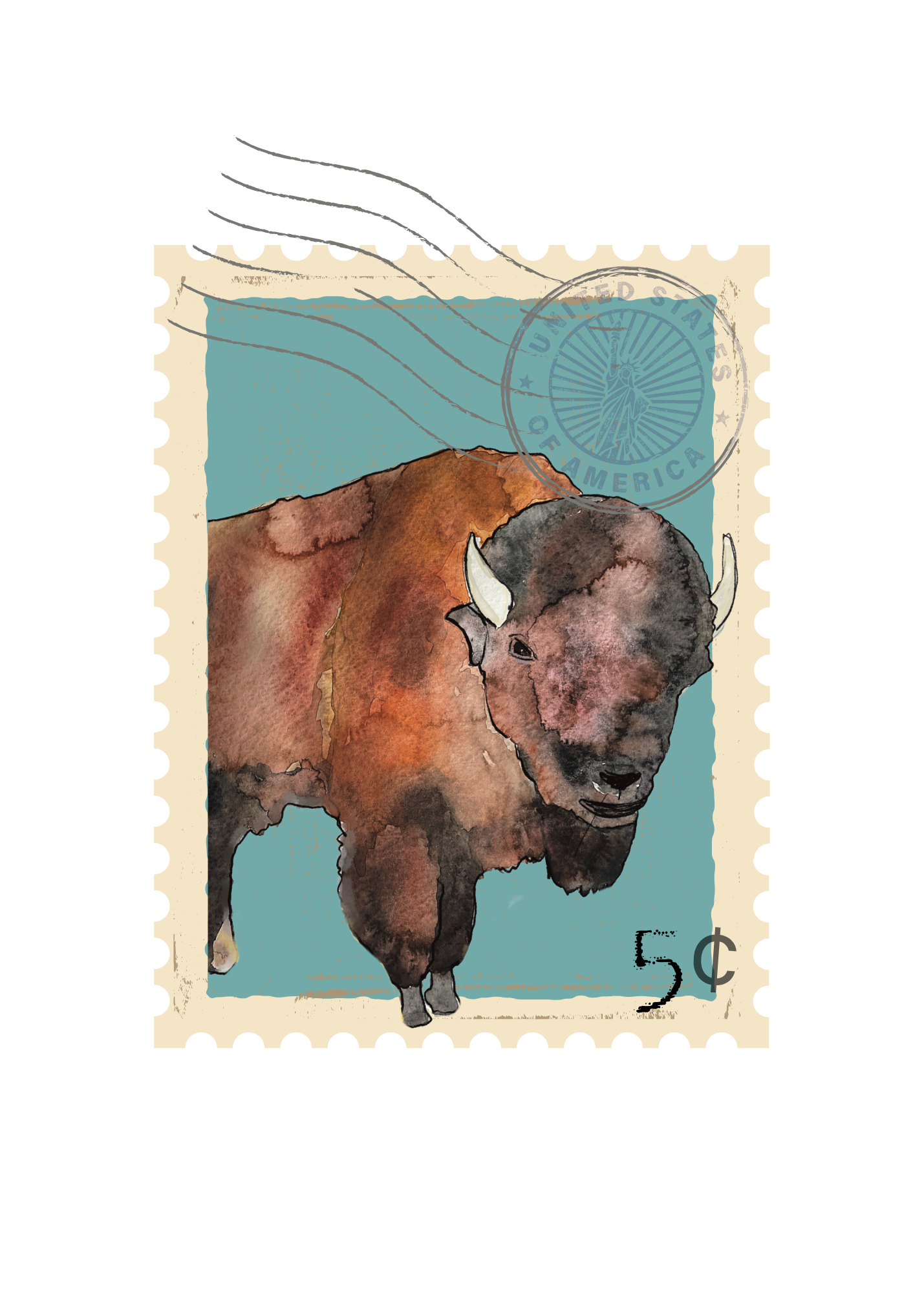
Every day, as travelers crest the rise on Interstate 70, the scene unfolds like a verse from “America the Beautiful” with purple mountain majesty stretching across the horizon. Driving west into the mountains, the light deepens as the sun drops behind the peaks — a gift no matter how many times it’s seen. Just beyond the highway, movement stirs on the hills of Genesee Park — dark shapes grazing beneath the fading light; a herd of bison, often called buffalo, moving slowly across the slope. To most local passersby they are a familiar landmark, a living postcard of the American West, where the spirit of spacious skies still meets the strength of the land. Yet these quiet animals carry a story of loss and return that was written across the plains.
Before pioneers came west, an estimated 30 to 60 million bison roamed the plains, shaping both the land and the lives of those who depended on them. For many Native nations, the buffalo were kin — sacred relatives whose strength, endurance, and generosity were gifts of the Creator. Their migrations aerated the soil, spread seed, and kept the deep prairie grasses rooted, binding the earth together.
By the late 1800s that balance collapsed. Railroads cut across the plains and industrial markets turned killing into commerce. Soldiers and settlers were encouraged to shoot every buffalo they saw or drive entire herds over cliffs, believing that if the buffalo were gone, the Native peoples who followed them would vanish too. Millions were left to rot where they fell. What had once been abundance became desolation. Fewer than a thousand bison survived in the wild, and the grasslands that had thrived under their care began to fail. Without hooves to press rain into the soil or roots to hold the ground, the prairie dried and blew away. The amber waves of grain turned to dust, and a nation learned too late how tightly life and land had been intertwined.
At the turn of the 20th century, when the great herds had nearly vanished, a few people began to see what had been lost. Across the plains, ranchers, scientists and tribal leaders worked quietly to save the last surviving buffalo. Decades after Yellowstone became the nation’s first national park, President Theodore Roosevelt established the National Bison Range in western Montana in 1908, one of the first federal wildlife refuges created to protect the last wild buffalo. The range’s first 34 bison came from the Pablo Allard herd, raised by members of the Confederated Salish and Kootenai Tribes, the same herd that helped restock Yellowstone a few years earlier. Together these efforts marked one of the first collaborations between Indigenous caretakers and federal conservationists, a partnership that helped bring the species back from the edge of extinction.
In 1914 the City and County of Denver, working with the Denver Zoo, brought a handful of Yellowstone bison to the newly formed Genesee Park — Denver Mountain Parks’ first park and one of the earliest municipal conservation herds in the nation. The project was not driven by profit or politics but by conviction and the sense that something sacred had to be restored. Bringing the buffalo back to the foothills was more than an act of preservation; it was an act of respect. By 1938 the herd had expanded to Daniels Park, and Denver had become a model for urban conservation long before such efforts were common.
The work of restoration has continued for more than a century. In recent years, Denver Mountain Parks has shared the Genesee herd with tribes working to rebuild their ancestral connections to the buffalo. In 2023, 35 bison descended from these foothill pastures were returned to Native lands, continuing a cycle of renewal that began generations ago. The path of conservation is still unfolding. In 2025, Colorado passed a law allowing bison to be managed as wildlife once again, offering protection for wild individuals crossing state lines in hopes that one day truly wild herds may again roam this land.
Today, visitors can walk the Genesee Mountain Trail and trace the fence line where the herd grazes. The path circles through forest and meadow, inviting reflection on the cyclical nature of this story as visitors walk where the buffalo were nearly eradicated, then saved by Native nations who later worked with the government to restore the herds. In 2023, buffalo calves from Genesee were returned to tribal lands, extending a circle of reverence, respect, and brotherhood beneath America’s spacious skies.